
Release Tension Held Deep in Muscle
Cupping therapy in Surprise uses controlled suction to increase circulation and relieve restrictions that limit how your body moves.
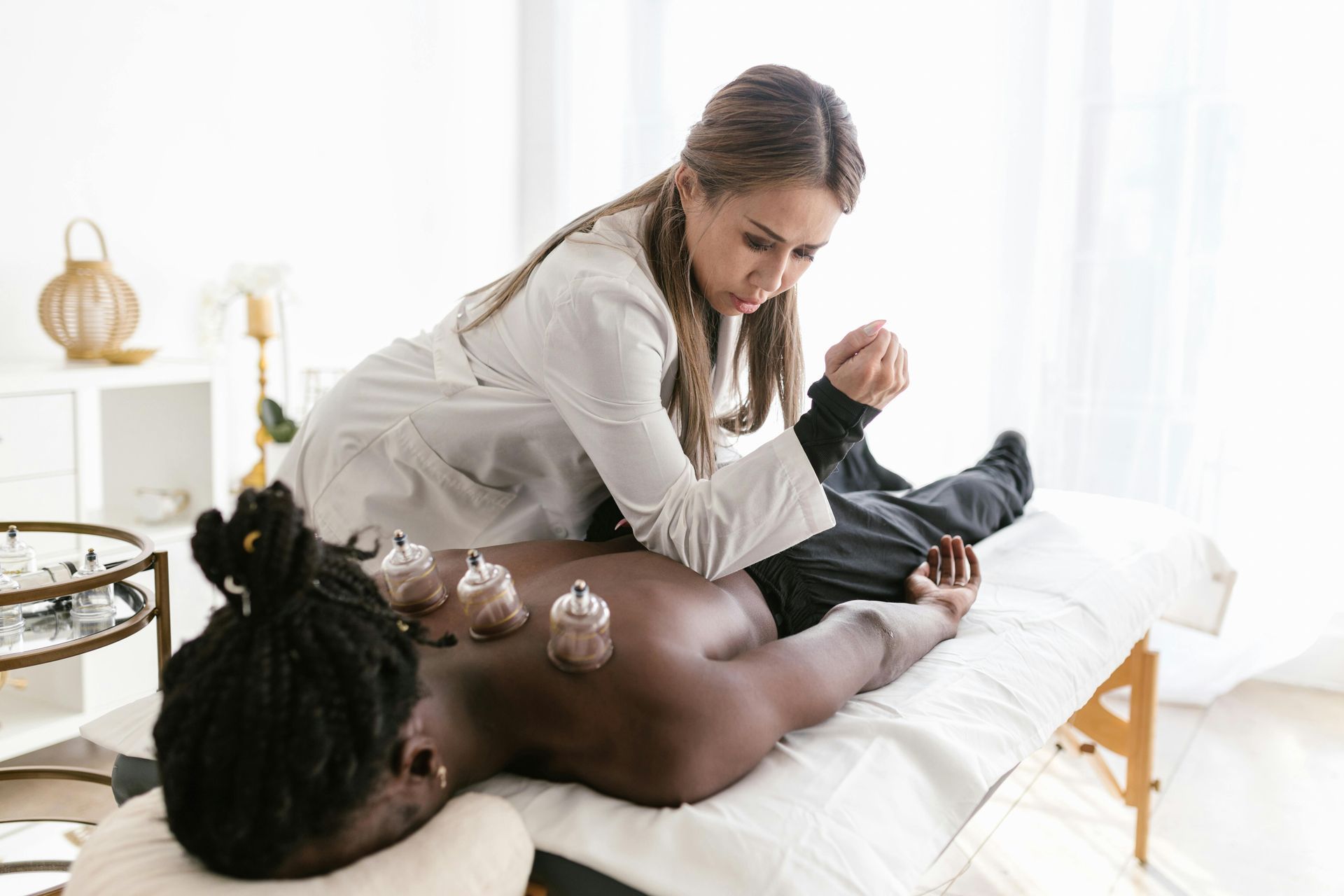
When you carry tension in your shoulders or lower back, you feel it every time you reach overhead or bend forward. In Surprise, people dealing with repetitive strain from desk work or physical labor often turn to cupping therapy to address tightness that stretches and manual pressure alone cannot fully release. The suction created by the cups lifts tissue away from underlying structures, drawing fresh blood into areas that have been starved of circulation and helping your body break down adhesions that restrict movement.
Innovative Bodyworks uses specialized cups placed on your skin to create negative pressure that pulls tissue upward rather than pressing it down. This approach works particularly well for fascial restrictions, which are layers of connective tissue that can bind together after injury, overuse, or prolonged poor posture. Cupping is often combined with massage to address both surface and deep tension in a single session, giving you a more complete result than either technique would provide on its own.
If you are looking for an alternative method to address chronic tightness or limited range of motion in Surprise, contact Innovative Bodyworks to discuss how cupping therapy fits into a treatment plan built around your specific needs.
How Suction Affects Tissue and Blood Flow
During your session in Surprise, cups are placed on targeted areas such as your upper back, shoulders, or hips depending on where you hold the most tension. The therapist creates suction either through heat or a manual pump, and the cups remain in place for several minutes or are moved slowly across your skin to cover a broader area. You will feel a pulling sensation that is firm but not painful, and the tissue beneath the cup will lift visibly as circulation increases.
After the cups are removed, you will notice that the treated areas feel looser and that movement becomes easier in joints that were previously stiff or guarded. The increased blood flow helps clear metabolic waste from the tissue and delivers oxygen and nutrients that support healing. Temporary circular marks often appear where the cups were placed, and these are a normal response to the suction rather than a sign of injury.
These marks typically fade within a few days to a week, and the therapist will explain what to expect before beginning the treatment. Cupping is particularly effective when used alongside other manual techniques, allowing the therapist to address layers of tension that respond differently to pressure versus suction. The session is tailored to your tolerance and specific areas of restriction, ensuring that the work is both effective and comfortable.
People new to cupping therapy often want to know what the process feels like, how long the marks last, and whether it will help with their specific type of pain or limitation.
Questions That Come Up Before Your First Session
Innovative Bodyworks works with clients in Surprise who want to try cupping as part of a broader plan to manage pain and improve mobility. Reach out to schedule a session and discuss how this technique can be integrated with other bodywork methods to address your specific concerns.